Nigella Lemon Meringue Cake
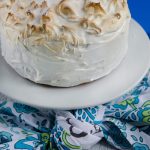
This stovetop-adapted lemon meringue cake layers tender lemon-scented sponge with a bright, silky lemon curd and a soft Italian-style meringue finish. The flavor is sharply citrusy yet balanced, with a light crumb, creamy filling, and toasted marshmallow notes from the meringue.
- Prep Time: 35
- Cook Time: 45
- Total Time: 80
- Yield: 4 1x
- Category: Main Course
- Method: Stovetop
- Cuisine: International
Ingredients
For the Lemon Sponge
- 1 cup all-purpose flour
- 1 tsp baking powder
- 1/4 tsp fine sea salt
- 6 tbsp unsalted butter, softened
- 1/2 cup granulated sugar
- 2 large eggs, room temperature
- 2 tbsp whole milk, room temperature
- 1 tbsp finely grated lemon zest
- 2 tbsp fresh lemon juice
For the Lemon Curd Filling
- 2 large egg yolks
- 1/3 cup granulated sugar
- 1 tbsp cornstarch
- 1/4 cup fresh lemon juice
- 1 tsp finely grated lemon zest
- 3 tbsp unsalted butter, cut into pieces
For the Meringue
- 2 large egg whites, room temperature
- 1/2 cup granulated sugar
- 2 tbsp water
- 1/8 tsp fine sea salt
For Finishing
- 1/4 tsp cream of tartar
Instructions
- Prepare a stovetop cake setup by placing a wire rack or metal ring inside a large, heavy pot with a tight-fitting lid. Cover the lid with a clean kitchen towel to catch condensation, then preheat the covered pot over medium-low heat for 10 minutes; the goal is gentle, even ambient heat, not direct bottom scorching. As an oven alternative, you can bake the sponge at 350°F / 177°C for 20 to 24 minutes in the same pan size.
- Grease and line one 7-inch round cake pan with parchment on the bottom, making sure the sides are lightly coated so the sponge releases cleanly. In a medium bowl, whisk together the flour, baking powder, and fine sea salt for 30 seconds to distribute the leavening evenly. This prevents dense pockets and helps the cake rise uniformly.
- In a separate bowl, beat the softened butter and 1/2 cup granulated sugar with a hand mixer for 3 to 4 minutes until pale, fluffy, and visibly increased in volume. Add the eggs one at a time, beating well after each addition so the batter stays emulsified and does not look curdled. Mix in the milk, lemon zest, and lemon juice; the mixture may look slightly loose, which is normal at this stage.
- Add the dry ingredients to the butter mixture and fold gently with a spatula just until no dry streaks remain. Do not overmix, or the sponge can become tough and tunnel as it cooks. Scrape the batter into the prepared pan and level the surface with a small offset spatula.
- Set the cake pan onto the rack inside the preheated pot and cover immediately. Cook over low heat for 28 to 35 minutes, checking only after the 25-minute mark to avoid dropping the trapped heat; the cake is done when the top looks dry, the center springs back lightly, and a tester comes out with a few moist crumbs. Remove the pan and cool for 10 minutes, then turn the cake out onto a rack and cool completely before slicing.
- While the cake cooks, make the lemon curd filling in a small saucepan. Whisk the egg yolks, 1/3 cup granulated sugar, cornstarch, lemon juice, and lemon zest until smooth before placing the pan over medium-low heat; whisk constantly so the yolks thicken gently rather than scrambling. In 3 to 5 minutes, the curd should become glossy and thick enough to leave brief lines from the whisk.
- Take the curd off the heat and whisk in the 3 tablespoons butter a piece at a time until fully melted and smooth. Strain through a fine-mesh sieve into a bowl if you want an especially refined texture, then press plastic wrap directly onto the surface to prevent a skin from forming. Let it cool to room temperature, then chill for 10 to 15 minutes so it firms enough to spread.
- For the meringue, place the egg whites, cream of tartar, and 1/8 teaspoon fine sea salt in a clean mixing bowl free of any grease. In a very small saucepan, combine the remaining 1/2 cup granulated sugar and water and bring to a simmer over medium heat, swirling occasionally until the sugar fully dissolves and the syrup looks clear. Do not stir once it simmers, or sugar crystals may form on the sides of the pan.
- As the syrup cooks, beat the egg whites on medium speed until they reach soft peaks that droop gently from the beaters. With the mixer running on medium-low, slowly pour the hot syrup in a thin stream down the side of the bowl, avoiding the beaters so the syrup does not splatter or seize. Increase to medium-high and beat for 4 to 5 minutes until the meringue is thick, glossy, and holds firm peaks while the bowl feels just warm, not hot.
- Slice the cooled cake horizontally into 2 even layers using a serrated knife, rotating the cake as you cut to keep the line level. Place the bottom layer on a serving plate and spread all of the lemon curd evenly to within 1/4 inch of the edge; this border keeps the filling from squeezing out. Set the top layer in place and press very lightly to secure it without forcing out the curd.
- Spread the meringue over the top and sides of the cake with the back of a spoon, creating swirls and peaks for texture. If you have a kitchen torch, toast the meringue lightly until the ridges are golden brown and smell faintly caramelized; keep the flame moving so it colors evenly and does not burn. Without a torch, leave the meringue untorched for a softer marshmallow finish.
- Let the assembled cake stand for 15 minutes before slicing so the filling settles and the meringue firms slightly. Use a sharp knife wiped clean between cuts for neat slices that show the layers clearly. Serve the cake the same day for the best contrast between tender sponge, bright curd, and airy meringue.
Notes
Store the assembled cake in the refrigerator, loosely covered, for up to 2 days; the meringue will weep slightly over time, so same-day service is ideal. The sponge layer can be wrapped well and refrigerated for 3 days or frozen for up to 2 months; thaw overnight in the refrigerator before assembling. Lemon curd can be refrigerated in an airtight container for up to 5 days. For best texture, do not microwave the finished cake; instead, let refrigerated slices stand at cool room temperature for 20 minutes before serving. If using the oven alternative, bake the sponge at 350°F / 177°C and cool exactly as directed before filling.
Nutrition
- Calories: 522
- Sugar: 50.8g
- Sodium: 178mg
- Unsaturated Fat: 14.4g
- Carbohydrates: 69.2g
- Fiber: 0.6g
- Protein: 6.9g
- Cholesterol: 157mg
Keywords: Nigella lemon meringue cake, lemon cake, stovetop cake, lemon curd cake, meringue cake, citrus dessert
Find it online: https://chefnigellarecipes.uk/nigella-lemon-meringue-cake/