Nigella Chocolate Gingerbread Cake
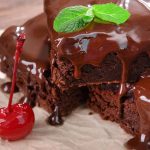
This dark, moist chocolate gingerbread cake has the deep bittersweet flavor of cocoa and molasses balanced by warm ginger, cinnamon, and cloves. Cooked gently on the stovetop, it develops a tender, pudding-like crumb with a glossy finish and stays exceptionally soft for days.
- Prep Time: 20
- Cook Time: 55
- Total Time: 75
- Yield: 4 1x
- Category: Main Course
- Method: Stovetop
- Cuisine: International
Ingredients
- 1 cup all-purpose flour
- 1/4 cup unsweetened natural cocoa powder, sifted
- 1 tsp ground ginger
- 1/2 tsp ground cinnamon
- 1/8 tsp ground cloves
- 1 tsp baking soda
- 1/4 tsp fine sea salt
- 6 tbsp unsalted butter
- 1/2 cup dark brown sugar, packed
- 1/2 cup unsulfured molasses
- 1/2 cup whole milk
- 1 large egg, room temperature and lightly beaten
- 2 oz dark chocolate, finely chopped
- 1 tsp neutral oil, for greasing the pan
Instructions
- Prepare a deep 7-inch heatproof cake pan or metal bowl that fits inside a large lidded pot with room around it for steam to circulate. Lightly grease the pan with the neutral oil and line the base with a round of parchment; this prevents sticking because the cake stays very moist and delicate. Set a kettle of water on to boil so your steaming liquid is ready when the batter is mixed.
- In a medium bowl, whisk together the all-purpose flour, cocoa powder, ground ginger, cinnamon, cloves, baking soda, and fine sea salt for 30 seconds. Whisking thoroughly distributes the leavening and spices evenly so the finished cake rises uniformly and does not develop bitter pockets of baking soda. Break up any cocoa lumps now, because they are difficult to smooth out once the wet ingredients are added.
- Place the unsalted butter, dark brown sugar, molasses, and whole milk in a medium saucepan over medium-low heat. Stir steadily until the butter melts and the sugar dissolves, 3 to 5 minutes; the mixture should look smooth and glossy, and it should smell deeply caramelized but not scorched. Do not let it boil hard, or the milk can catch on the bottom and the molasses can taste harsh.
- Remove the saucepan from the heat and add the chopped dark chocolate. Let it sit for 30 seconds, then whisk until fully melted and smooth; the residual heat is enough and helps keep the chocolate from seizing. Leave the mixture to cool for 5 minutes so it is warm rather than hot before the egg goes in.
- Whisk the beaten egg into the warm chocolate-molasses mixture until fully incorporated and no streaks remain. Adding the egg off the heat prevents scrambling and gives the batter a smoother structure. If the mixture still feels very hot to the touch, wait another 2 minutes before proceeding.
- Pour the wet mixture into the bowl of dry ingredients and fold with a whisk or flexible spatula just until no dry flour remains, about 20 to 30 seconds. The batter will be quite loose, more like a thick pourable pudding than a typical cake batter, and that is correct for a steamed gingerbread. Avoid overmixing, which can make the crumb heavy instead of tender.
- Scrape the batter into the prepared pan and tap the pan gently twice on the counter to release large air bubbles. Cover the top tightly with a double layer of foil, crimping around the rim so condensation cannot drip onto the cake and make the surface gummy. If you have one, tie kitchen twine under the rim to create a sling for easier lifting later.
- Set a small trivet, metal ring, or inverted heatproof saucer in the bottom of a large heavy pot and place the covered cake pan on top. Pour in enough boiling water to come about halfway up the sides of the cake pan, then cover the pot with a tight-fitting lid. This gentle water-bath steaming cooks the cake evenly without direct bottom heat, which is essential for a stovetop method.
- Bring the water just to a lively simmer over medium heat, then reduce to medium-low or low so the water maintains a steady gentle simmer. Steam for 50 to 55 minutes, checking once or twice to make sure the water has not dropped too low; add more boiling water if needed, never cold water, so the temperature stays stable. You should hear a quiet, regular bubbling rather than violent knocking, which would indicate the heat is too high.
- Begin checking at 50 minutes by lifting the lid away from you so steam does not drip onto the cake. The cake is done when the top looks set and a skewer inserted through the foil into the center comes out with a few moist crumbs but no wet batter. If needed, re-cover and steam 5 minutes longer; undercooked center batter will look shiny and cling heavily to the skewer.
- Carefully lift the pan from the pot and place it on a wire rack. Remove the foil immediately so trapped steam cannot condense back onto the surface, then let the cake rest in the pan for 15 minutes; this settling time allows the crumb to firm up and makes unmolding cleaner. Run a thin knife around the edge, invert, peel off the parchment, and turn right side up to cool until just warm.
- Serve the cake in thick wedges while slightly warm or at room temperature. Its texture is richest after a 30-minute rest, when the molasses and spice notes mellow and the crumb slices neatly. If you prefer an oven alternative, bake the same batter in a greased and lined 7-inch pan at 350°F / 177°C for 30 to 35 minutes, until a skewer comes out with a few moist crumbs.
Notes
Store the cooled cake tightly wrapped at room temperature for up to 2 days or in the refrigerator for up to 5 days. For longer storage, wrap slices well and freeze for up to 2 months; thaw overnight in the refrigerator or for 1 to 2 hours at room temperature. Reheat individual slices in a 300°F / 149°C oven for 8 to 10 minutes, or steam gently in a covered heatproof dish over simmering water for 5 to 7 minutes to restore moisture.
Nutrition
- Calories: 556
- Sugar: 57.6g
- Sodium: 406mg
- Unsaturated Fat: 11.0g
- Carbohydrates: 93.8g
- Fiber: 4.8g
- Protein: 7.7g
- Cholesterol: 79mg
Keywords: Nigella chocolate gingerbread cake, stovetop gingerbread cake, chocolate molasses cake, ginger cake, cocoa gingerbread, one-pot cake