 Anabelle Mclean
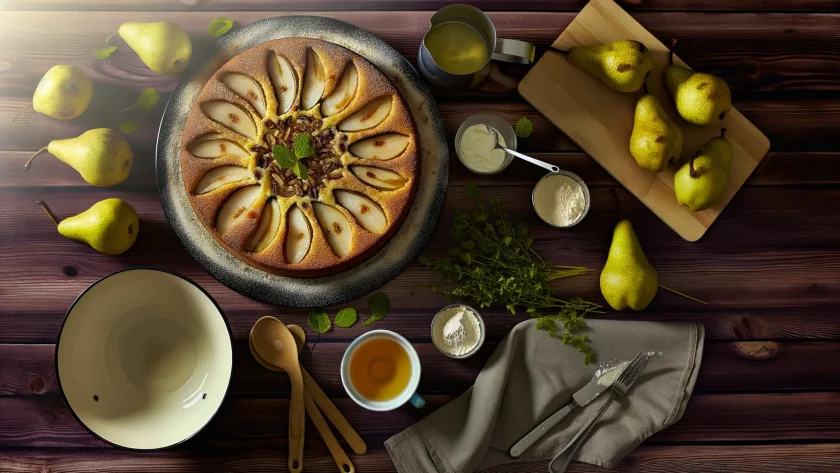
 There is something quietly special about a Nigella Pear Cake. It’s a moist, rustic bake where tender pears sink into a buttery, vanilla-scented batter, creating pockets of juicy fruit. The top bakes to a golden, slightly crisp crust that contrasts beautifully with the soft interior.
This elegant yet simple dessert is perfect for a weekend treat or a relaxed afternoon tea. It takes about 75 minutes from start to finish, and I’d call it a solid beginner-friendly recipe. The only tricky part is ensuring your pears are ripe but firm, and not overmixing the batter once the flour goes in.
What Exactly Is Nigella Pear Cake?
At its heart, this is a classic British teatime cake. It belongs to the same family as a Dorset apple cake or a simple plum bake, where fruit is folded directly into a thick batter. The magic happens in the oven as the fruit softens and releases its juices into the surrounding crumb.
What sets it apart is its texture. You get a wonderfully moist crumb with soft, sweet pockets of pear, all held together by a cake that’s sturdy enough to slice but tender enough to melt in your mouth. It’s a study in comforting, un-fussy baking.
Why This Recipe Is a Must-Try
After making this countless times, I keep coming back for a few key reasons.
- Effortless Elegance — It looks and tastes far more impressive than the effort required. The dusting of powdered sugar transforms it into something quite beautiful.
- Texture contrast is everything here. The crisp, sugary top gives way to a supremely soft, fruit-studded interior that’s incredibly satisfying.
- Versatility makes it a winner. Serve it warm as a dessert with cream, at room temperature for tea, or even for a weekend brunch.
- Forgiving nature is a big plus. Even if your pear pieces aren’t perfectly uniform, the cake bakes up beautifully every time.
- Crowd-pleasing flavor appeals to almost everyone. It’s not overly sweet, letting the natural flavor of the pears shine through.
Key Ingredients Needed for Nigella Pear Cake
Every ingredient here has a specific job. Using the right ones makes all the difference.
- 2 medium ripe but firm Bartlett or Anjou pears — They provide the juicy, sweet pockets that define the cake. Firm pears hold their shape better during baking.
- 1 tablespoon fresh lemon juice — This prevents the pears from browning as you prep the batter and adds a subtle brightness.
- 1 1/2 cups (188g) all-purpose flour — The foundation of the cake’s structure. Spooning and leveling ensures you don’t use too much.
- 1 1/2 teaspoons baking powder — This is the primary leavening agent that gives the cake its lift.
- 1/2 teaspoon fine sea salt — It balances the sweetness and enhances all the other flavors.
- 1/2 cup (1 stick / 113g) unsalted butter, at room temperature — Essential for creating a light, fluffy batter during creaming. Room temp is non-negotiable.
- 3/4 cup (150g) granulated sugar — Sweetens the cake and, when creamed with butter, helps incorporate air.
- 2 large eggs, at room temperature — They bind the batter and contribute to the rich, tender crumb.
- 1 1/2 teaspoons pure vanilla extract — Adds a warm, aromatic depth that complements the pears perfectly.
- 1/3 cup (80ml) whole milk, at room temperature — Loosens the batter to the right consistency and adds moisture.
- 1 tablespoon turbinado or demerara sugar (optional) — Sprinkled on top for a delightful, crunchy texture and caramelized flavor.
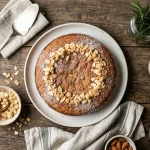
- Confectioners’ sugar, for dusting (optional) — The final elegant touch that adds a light sweetness and beautiful finish.
Equipments
- 8-inch round cake pan
- Parchment paper
- Mixing bowls (medium and large)
- Stand mixer or hand mixer
- Flexible spatula
- Wire cooling rack
- Fine-mesh sieve (for dusting sugar)
Instructions to Make Nigella Pear Cake
The process is straightforward, but a few careful steps ensure a perfect result.
- Prep the Pan and Pears — Preheat your oven to 350°F (177°C). Grease your pan, line the bottom with parchment, and flour the sides. Toss the cubed pears with lemon juice to prevent browning.
- Combine Dry Ingredients — Whisk the flour, baking powder, and salt together thoroughly. This distributes the leavening evenly, so you don’t get bitter spots.
- Cream Butter and Sugar — Beat the room-temperature butter and granulated sugar for a full 3-4 minutes until pale and fluffy. This incorporates air, which is crucial for a light texture.
- Incorporate Eggs and Vanilla — With the mixer on low, add the eggs one at a time, mixing fully after each. Add the vanilla with the second egg. The mixture may look slightly curdled, but that’s fine.
- Alternate Dry and Wet — Add the flour mixture and milk in three parts, starting and ending with the dry ingredients. Mix on low just until the flour disappears. Overmixing now will make the cake tough.
- Fold in the Pears — Gently fold the pears and any lemon juice into the thick batter until evenly distributed. Don’t worry if it seems very full of fruit.
- Transfer and Top — Spread the batter evenly into the prepared pan. It will be quite full. Sprinkle the top with turbinado sugar for a crunchy crust, if using.
- Bake to Perfection — Bake for 45-55 minutes on the center rack. It’s done when the top is deep golden, the edges pull away, and a tester inserted into the cake (not a pear) comes out clean.
- Cool in the Pan — Let the cake cool in the pan on a wire rack for 20 minutes. This allows the structure to set so it doesn’t break when you turn it out.
- Turn Out and Cool Completely — Run a knife around the edge, invert onto the rack, remove the parchment, and flip it right-side-up onto a plate. Let it cool fully for about an hour for the crumb to set.
- Dust and Slice — Just before serving, dust the top with confectioners’ sugar. Use a serrated knife and a gentle sawing motion to slice through the tender pears cleanly.
- Serve and Enjoy — Serve at room temperature. The texture is at its absolute best on the day it’s baked, though the flavors remain wonderful.
Common Mistakes I Made (And How I Fixed Each One)
I did not get this right on the first try. Here is what tripped me up.
- Overly Soft Pears — Using very ripe, mushy pears caused them to disappear into the batter. Ripe but firm fruit holds its shape and creates those distinct juicy pockets.
- Overmixing after adding flour developed too much gluten, resulting in a dense, rubbery texture. Now I stop the mixer the moment the last streak of flour disappears.
- Skipping the 20-minute cool in the pan meant the cake was too fragile and broke when I turned it out. Patience here is key for a perfect release.
- Testing for doneness in a pear chunk gave a false, wet reading. I always insert the toothpick into the cake batter itself to get a true sense of whether it’s baked through.
- Cutting the warm cake too soon caused it to crumble and squish. Letting it cool completely allows the crumb to set for clean, beautiful slices.
Healthier Version of Nigella Pear Cake
You can make a few simple swaps for a slightly lighter treat, though the texture will change a bit.
- Whole Wheat Flour — Replace half the all-purpose flour with whole wheat pastry flour. It adds fiber and a nutty flavor but may make the crumb slightly denser.
- Reduce the granulated sugar to 1/2 cup (100g). The pears provide natural sweetness, so you likely won’t miss it.
- Greek Yogurt Swap — Substitute half the butter (4 tablespoons) with an equal amount of full-fat plain Greek yogurt. This reduces saturated fat while keeping moisture.
- Using a neutral oil like avocado or light olive oil instead of butter creates a very moist, tender crumb, though you’ll lose the flavor from creaming.
- Skip the turbinado sugar topping and use just a light dusting of confectioners’ sugar to reduce added sugar without sacrificing the final touch.
What to Pair With Nigella Pear Cake
This cake is delightful on its own, but a few accompaniments can elevate it.
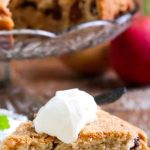
- Crème Fraîche or Whipped Cream — The slight tang and cool richness cut through the sweetness and add a luxurious feel.
- A scoop of good vanilla bean ice cream turns a simple slice into a proper warm dessert.
- Afternoon Tea or Coffee — It’s a classic for a reason. A cup of Earl Grey or a strong espresso is the perfect companion.
- Drizzle a little warm caramel sauce over a slice for an extra-indulgent treat.
- A Glass of Dessert Wine — A late-harvest Riesling or a Sauternes complements the pear flavors beautifully for a special occasion.
Pro Tips to Get Perfect Nigella Pear Cake Every Time
These small details, learned from many bakes, make a big difference.
- Room Temperature Ingredients — Ensure your butter, eggs, and milk are truly at room temperature. This allows them to emulsify properly, creating a smooth, uniform batter that rises evenly.
- Measure your flour correctly by spooning it into the cup and leveling it off with a knife. Scooping packs directly into too much flour, leading to a dry cake.
- Don’t Skimp on Creaming — Beat the butter and sugar for the full 3-4 minutes until it’s noticeably paler and fluffy. This is your main source of leavening and lightness.
- Fold the pears in gently by hand with a spatula. Using the mixer can break them down and overwork the batter.
- Use the toothpick test wisely. Insert it into the cakey part, avoiding the juicy pears, to get an accurate read on doneness.
- Cool Completely Before Slicing — I know it’s tempting, but the crumb needs time to set. Slicing too early leads to a gummy texture and messy pieces.
Easy Variations of Nigella Pear Cake
Once you’ve mastered the base recipe, try these simple twists.
- Apple and Cinnamon — Swap the pears for peeled, cubed apples (like Granny Smith) and add 1 teaspoon of ground cinnamon to the dry ingredients.
- Add 1/2 cup of chopped walnuts or pecans to the batter with the pears for a delightful crunch and nutty flavor.
- Ginger and Pear — Fold in 2 tablespoons of finely chopped crystallized ginger for a warm, spicy kick that pairs wonderfully with the fruit.
- Replace the vanilla extract with 1 teaspoon of almond extract for a marzipan-like flavor that’s fantastic with pears.
- Berry Addition — Reduce the pears to one and fold in 3/4 cup of fresh or frozen raspberries for a burst of color and tartness.
How to Store Nigella Pear Cake the Right Way
Proper storage keeps it tasting fresh.
- Room Temperature (Short Term) — Once completely cool, wrap the whole cake tightly in plastic wrap or store in an airtight container. It will keep well for up to 2 days.
- Refrigerating the cake extends its life. Wrap it well, and it will stay fresh for up to 4 days. Let it come to room temperature before serving for the best texture.
- Freezing for Longevity — Wrap the fully cooled, unsliced cake tightly in plastic wrap, then in foil. Freeze for up to 2 months.
- Store individual slices in a single layer in an airtight container, separated by parchment paper, for easy grab-and-go portions.
The Best Ways to Reheat Nigella Pear Cake
A quick warm-up can revive the texture beautifully.
- Conventional Oven — Place slices on a baking sheet and warm at 300°F (149°C) for 5-8 minutes. This refreshes the crust without drying it out.
- A toaster oven works perfectly for a single slice. Use a low setting for 3-5 minutes until just warmed through.
- Microwave in 10-second bursts if you’re in a hurry, but be careful as it can make the cake slightly rubbery if overheated.
Nutrition (Per Serving)
Based on 1 serving = 1 slice out of 4 total.
- Calories: 485
- Protein: 7g
- Fat: 27g
- Carbohydrates: 56g
- Fiber: 3g
- Sugar: 30g
- Sodium: around 380mg
Try Other Nigella Recipes
- Nigella Fudge Cake
- Nigella Mars Bar Cake
- Nigella Marzipan Cake
- Nigella Chocolate Yogurt Cake
- Nigella Lemon Yogurt Cake
FAQs
Can I use canned pears for Nigella Pear Cake?
I don’t recommend it. Canned pears are too soft and wet, which will make the batter soggy and can throw off the baking time. Fresh, firm pears are essential for the right texture.
How long does Nigella Pear Cake last in the fridge?
Wrapped tightly, it will keep well in the refrigerator for up to 4 days. The flavor actually deepens, but the texture is best if you let it come fully to room temperature before serving.
Can I freeze Nigella Pear Cake?
Absolutely. Wrap the completely cooled, unsliced cake tightly in plastic wrap and then foil. Freeze for up to 2 months. Thaw overnight in the fridge before bringing to room temperature.
My cake is browning too quickly on top. What should I do?
If the top is getting dark before the center is baked, loosely tent a sheet of aluminum foil over the pan for the last 15-20 minutes of baking. This will slow the browning without affecting the bake.
Can I make this cake gluten-free?
You can try using a 1:1 gluten-free all-purpose flour blend. The texture may be slightly more crumbly, but it should work. Ensure your baking powder is gluten-free as well.
What’s the best type of pear to use?
Bartlett or Anjou pears are ideal. You want pears that are fragrant and give slightly at the stem but are still firm to the touch. Overly ripe pears will turn to mush in the batter.
Final Thoughts
This cake has become one of my most reliable and beloved bakes. It’s the kind of recipe that feels like a warm hug—simple to make, impossibly comforting to eat, and always met with smiles. I hope this guide gives you the confidence to bake your own perfect Nigella Pear Cake. Once you try it, I think you’ll understand why it’s a staple in my kitchen.
PrintNigella Pear Cake
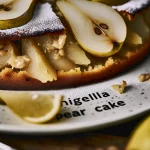
A moist, rustic cake where tender pears sink into a buttery, vanilla-scented batter, creating pockets of juicy fruit. The top bakes to a golden, slightly crisp crust that contrasts beautifully with the soft interior. It’s elegant yet simple, perfect with a dusting of powdered sugar or a dollop of crème fraîche.
- Prep Time: 25
- Cook Time: 50
- Total Time: 75
- Yield: 4 1x
- Category: Dessert
- Method: Baking
- Cuisine: British
Ingredients
- For the Pears and Batter:
- 2 medium ripe but firm Bartlett or Anjou pears (about 1 lb total), peeled, cored, and cut into 1/2-inch cubes
- 1 tablespoon fresh lemon juice
- 1 1/2 cups (188g) all-purpose flour, spooned and leveled
- 1 1/2 teaspoons baking powder
- 1/2 teaspoon fine sea salt
- 1/2 cup (1 stick / 113g) unsalted butter, at room temperature
- 3/4 cup (150g) granulated sugar
- 2 large eggs, at room temperature
- 1 1/2 teaspoons pure vanilla extract
- 1/3 cup (80ml) whole milk, at room temperature
- For Topping (Optional):
- 1 tablespoon turbinado or demerara sugar
- Confectioners’ sugar, for dusting
Instructions
- Preheat your oven to 350°F (177°C). Grease an 8-inch round cake pan with butter, line the bottom with a parchment paper round, and lightly flour the sides. This ensures easy release and prevents sticking. In a medium bowl, toss the cubed pears with the lemon juice to prevent browning and set aside.
- In another bowl, whisk together the flour, baking powder, and salt for 30 seconds to aerate and evenly distribute the leavening agent. Sifting is not strictly necessary if you whisk thoroughly, but it prevents lumps in the batter.
- In the bowl of a stand mixer fitted with the paddle attachment (or using a hand mixer), cream the softened butter and granulated sugar on medium-high speed for 3-4 minutes until the mixture is very pale, fluffy, and almost white. This incorporates air, which is crucial for a light cake texture. Scrape down the bowl halfway through.
- With the mixer on low, add the eggs one at a time, beating until each is fully incorporated before adding the next. Add the vanilla extract with the second egg. Scrape the bowl again to ensure homogeneity; curdling here is not a concern as the flour will bind it.
- Alternately add the dry ingredients and milk to the butter mixture. Begin and end with the dry ingredients (dry-milk-dry is a good sequence). Mix on low speed just until the flour disappears after each addition; overmixing at this stage develops gluten and leads to a tough cake.
- Using a flexible spatula, gently fold in the prepared pear cubes and any accumulated lemon juice until evenly distributed. The batter will be thick and heavily studded with fruit, which is correct.
- Transfer the batter to the prepared pan, spreading it evenly into a smooth layer. The pan will be quite full. Sprinkle the top evenly with the turbinado sugar, if using, for a delightful crunchy texture.
- Bake on the center rack for 45-55 minutes. The cake is done when the top is a deep golden brown, the edges pull slightly away from the pan, and a toothpick or cake tester inserted into the center (avoiding a pear chunk) comes out clean or with a few moist crumbs.
- Place the pan on a wire rack and let the cake cool in the pan for 20 minutes. This allows the structure to set; removing it too soon may cause it to break. Run a thin knife around the edge to loosen.
- Carefully invert the cake onto the rack, peel off the parchment, then invert it again onto a serving plate so the sugared top is facing up. Let it cool completely, about 1 hour, for the crumb to set fully before slicing.
- Just before serving, dust the top generously with confectioners’ sugar using a fine-mesh sieve. Slice with a serrated knife using a gentle sawing motion to get clean cuts through the tender pears.
- Serve at room temperature. The cake can be stored, but its texture is best enjoyed the day it is baked. The flavors will continue to develop as it sits.
Notes
Storage: Cool completely, then wrap tightly in plastic wrap or store in an airtight container at room temperature for up to 2 days. For longer storage, refrigerate for up to 4 days. Bring to room temperature before serving for best texture. Freezing: Wrap the fully cooled, unsliced cake tightly in plastic wrap, then in aluminum foil. Freeze for up to 2 months. Thaw overnight in the refrigerator, then bring to room temperature. Reheating: Individual slices can be warmed in a toaster oven or conventional oven at 300°F (149°C) for 5-8 minutes to refresh the crust.
Nutrition
- Calories: 485
- Sugar: 30g
- Sodium: 380mg
- Unsaturated Fat: 16g
- Carbohydrates: 56g
- Fiber: 3g
- Protein: 7g
- Cholesterol: 145mg
Keywords: nigella pear cake, pear cake recipe, british baking, easy fruit cake, moist pear cake, rustic dessert, autumn baking, tea cake, vanilla pear cake, buttery cake, weeknight dessert, nigella lawson inspired